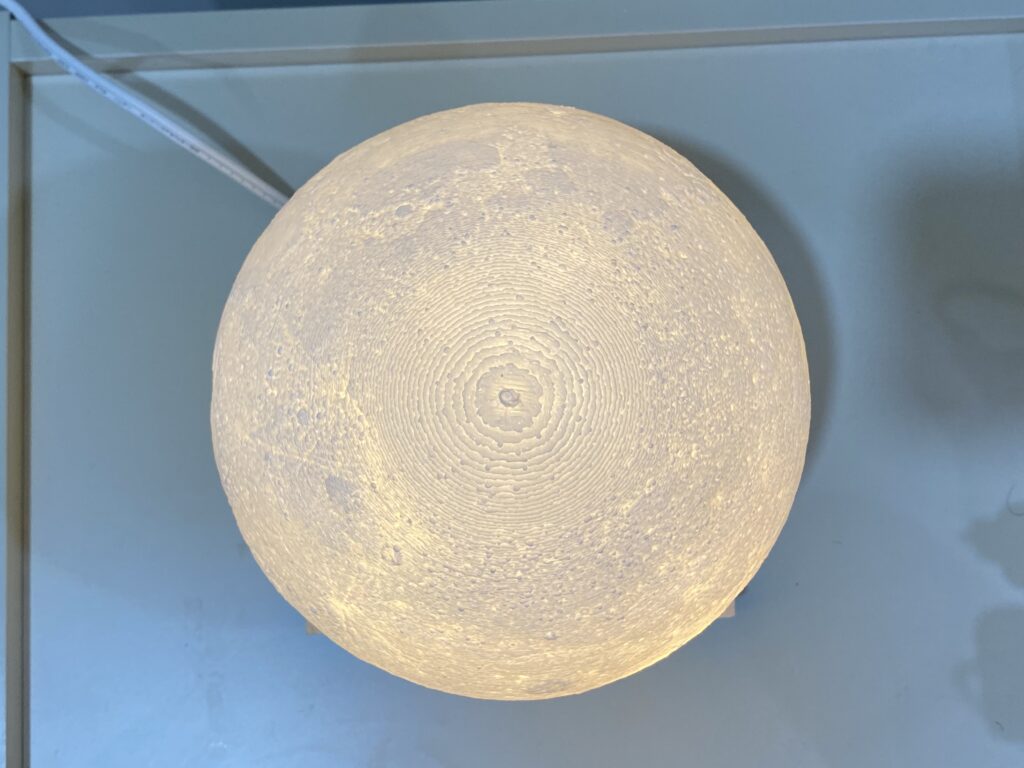
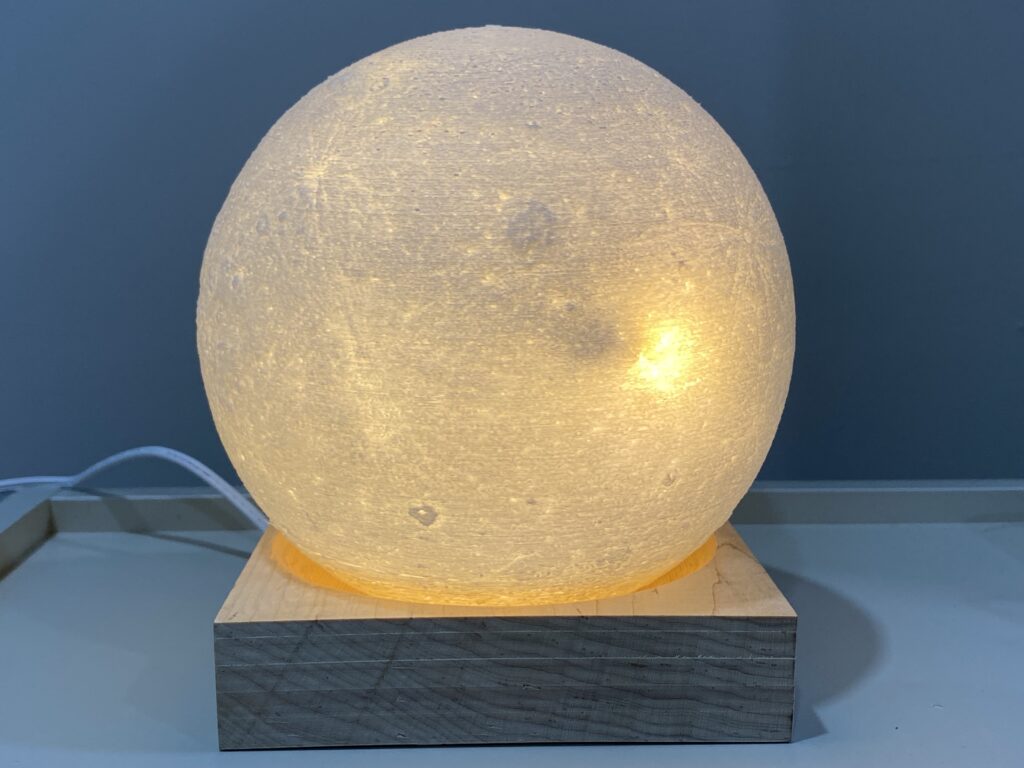
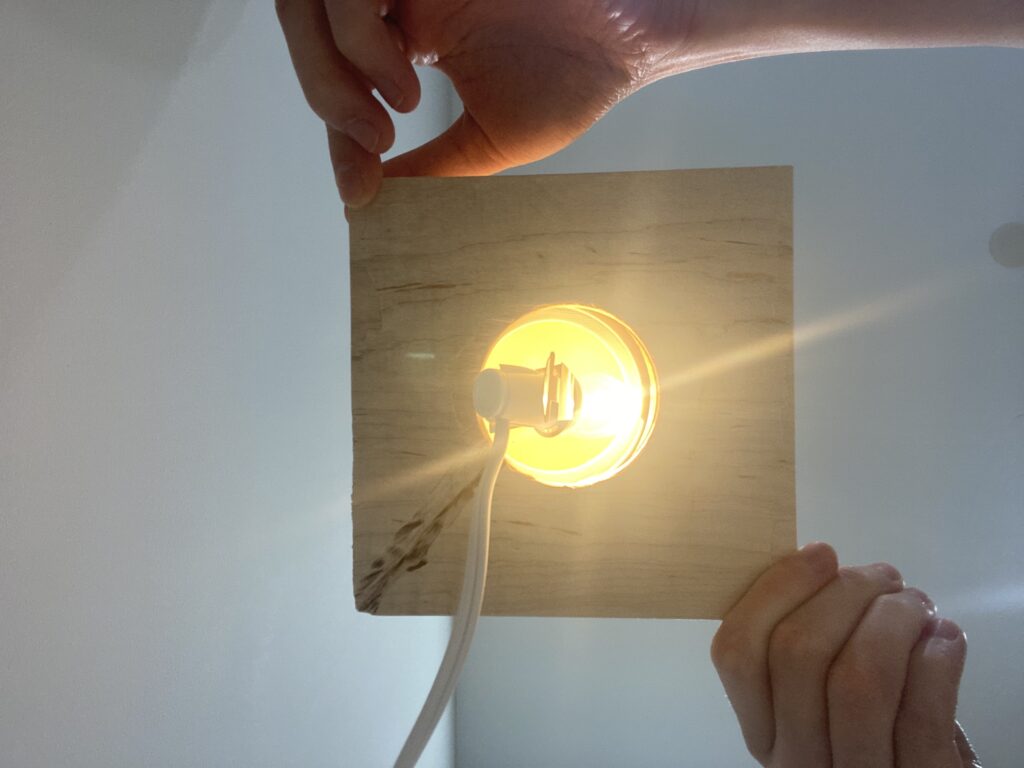
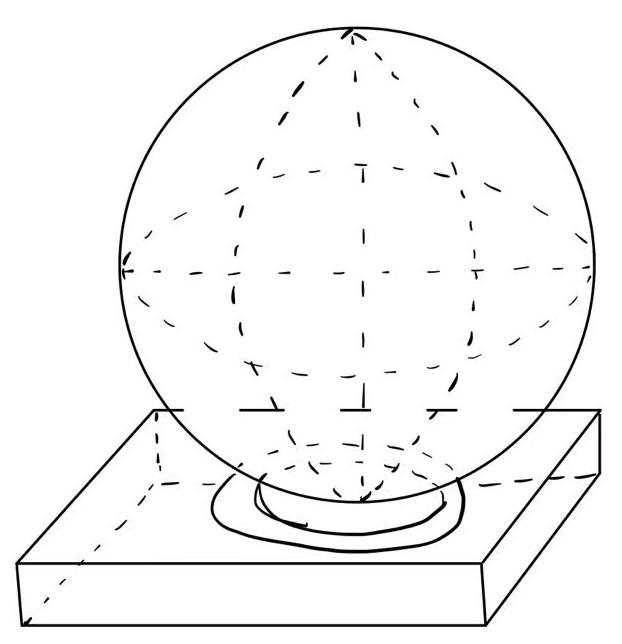
This was the first idea that came to mind—and I actually saw a similar spherical lamp at a friend’s place. My immediate reaction was, “Hey, I can make that!” Plus, I’ve wanted a beautiful bedside lamp for a long time, and this feels like the perfect chance to bring something I’m passionate about to life using the skills I’ve been learning.
Materials & Tools used
Material: PLA, PVA (water-soluble synthetic polymer), Wood piece, LED bulb
Tools:
FDM 3D Printing
CNC Cutting
LED electronics
from idea to product
Brainstorming
I thought about three products that interest me.
The first one is the LED night light. I would like to have a PLA light lamp cover using FDM 3D Printing, with a LED circuit inserted and CNC-cut wood base. This will be the housewarming gift I give to my partner so that he don’t need to bear with the dazzling incandescent lamp before sleep.
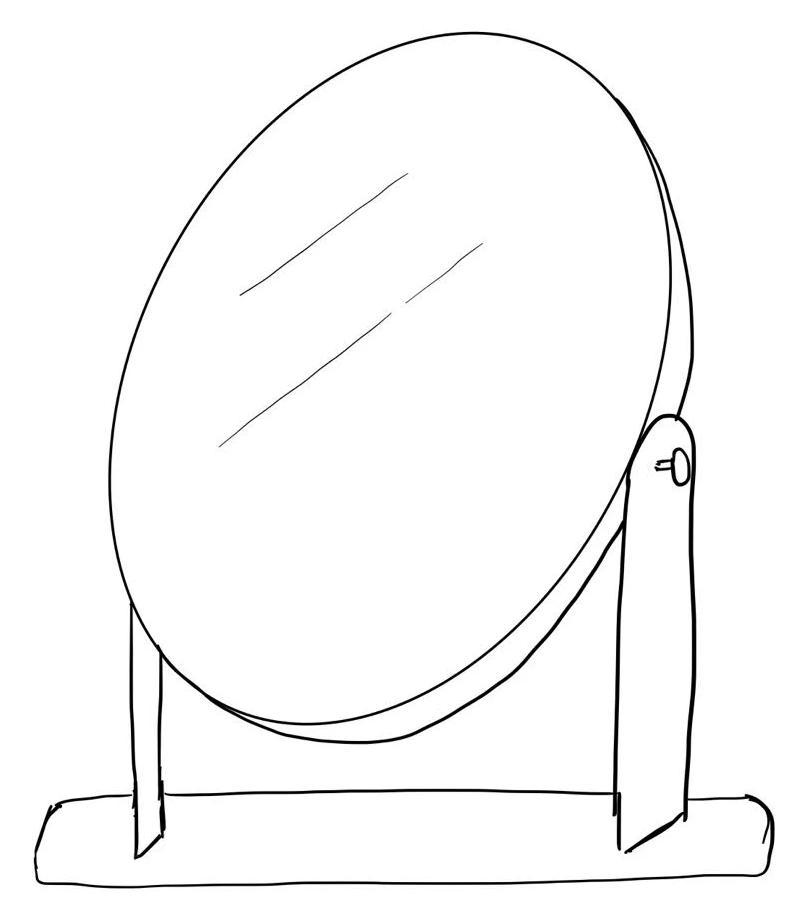
The second one is a wood-stand mirror. It will be a mirror with an adjustable angle and a freestanding wooden base. This project would be fully constructed through woodworking.
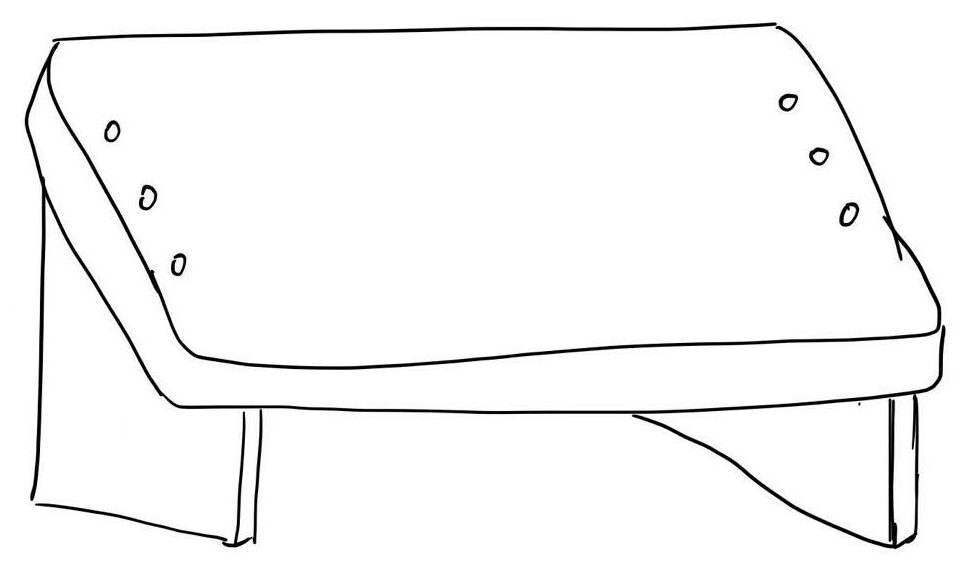
The third oen is gonna be an adjustable footrest. I want it to be A customized footrest to support good posture while sitting at a desk. This would also be a woodworking-only project.
Here are the sketch of how these three items would look like in my mind:
LED night light
Wood-stand mirror
Adjustable footrest
Determine
I finally chose LED night light to Move Forward With since I’ve been wanting it so bad and it was indeed the first idea that came to my mind.
What excites or challenges me about:
The wooden base needs to fit the lamp ball just right—not too wide (or it will roll), not too narrow (or it will fall off).
The ball must be large enough to hold the LED circuit, but if it gets too big, will it need tree supports inside? If so, how can I remove those supports without damaging the print?
What aspect of the design I am unsure about or curious to test in my MVP?
The lighting: Should the brightness be adjustable? If not, what wattage gives just the right glow for nighttime use—bright enough to be useful but soft enough to be cozy?
The lamp cover: How will the size and thickness of the MVP ball affect the final brightness and glow of the light?
What materials I anticipate to use?
Wood, PLA, LED light
1st MVP (Minimum Viable Product)
Areas aimed to test: size, stability, estimated cost of time, infill
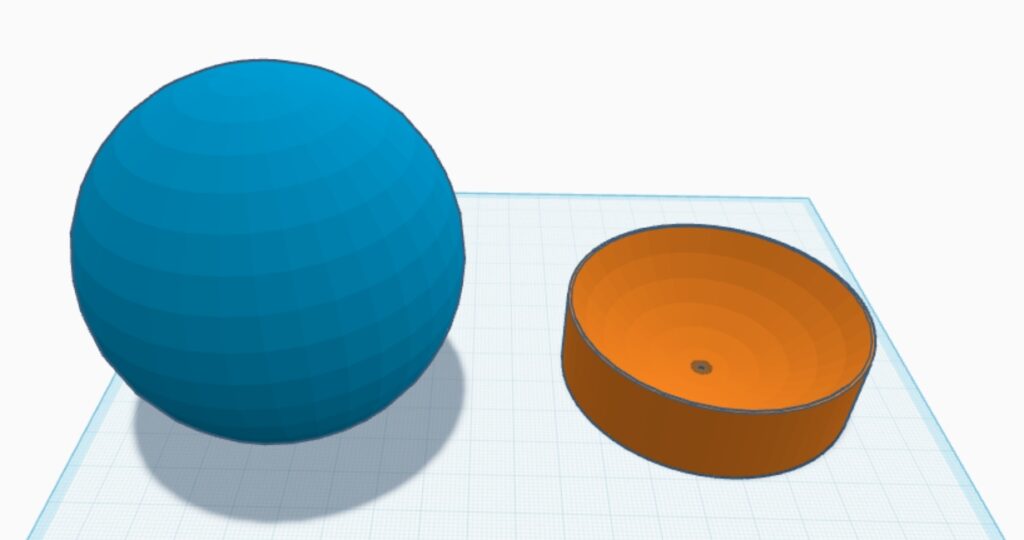
Material Replacement: Considering the complexity of operating the CNC machine, I replace wood base which was expected to be CNC cut into 3D-printed PLA-material base. Since the base should not be complicated and my purpose is to test whether the base can hold the sphere (lamp cover) stabily, the material doesn’t matter much at this point.
What worked:
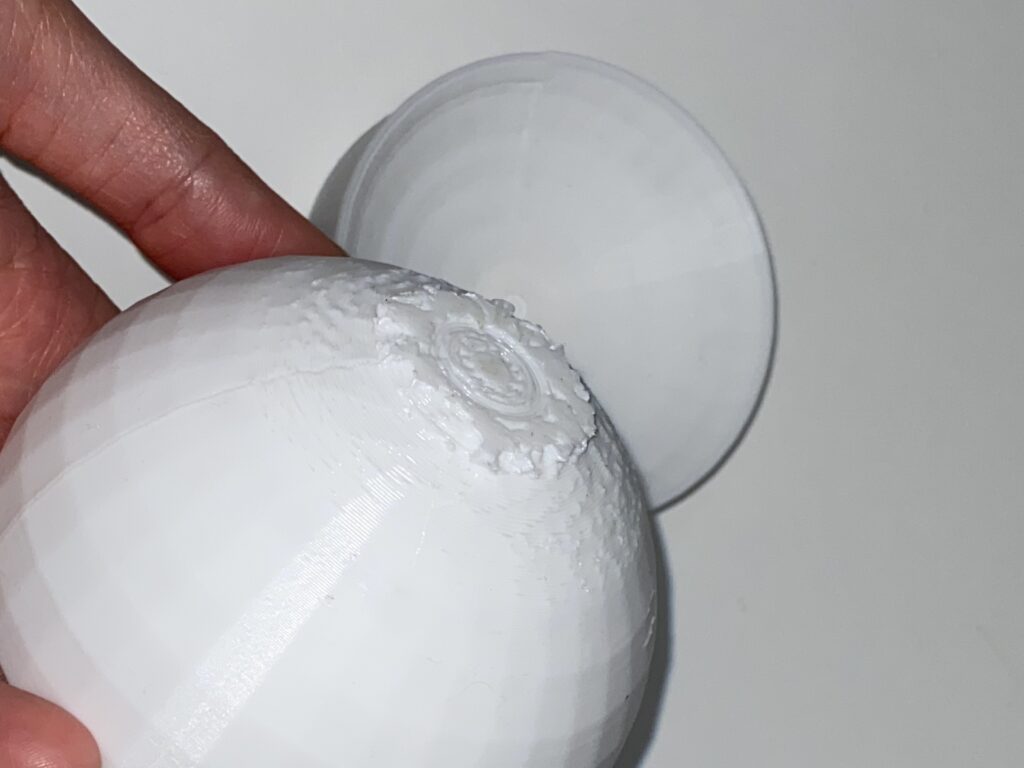
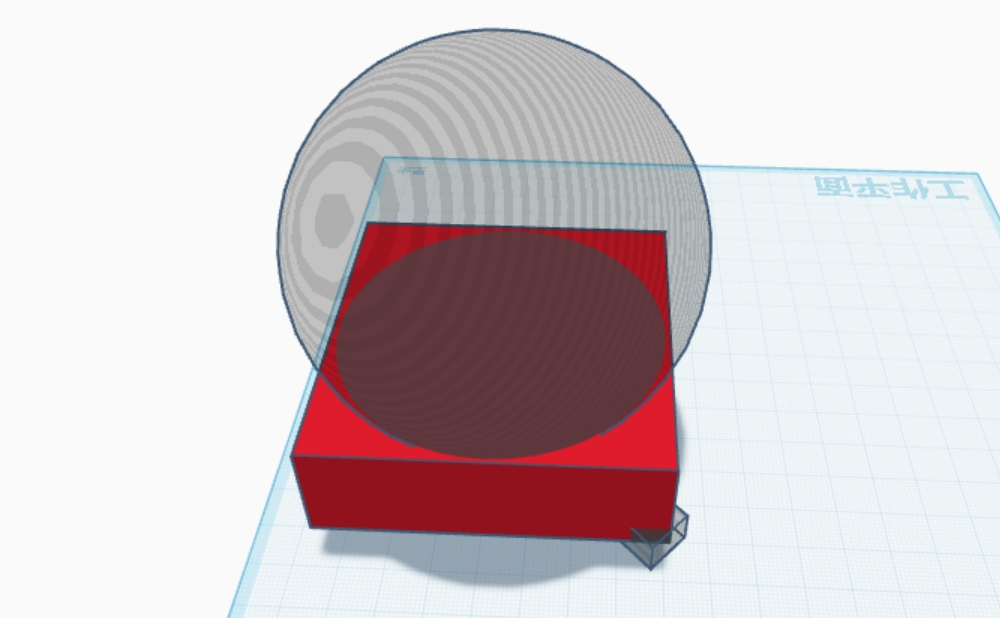
My thought to curve the base by putting a sphere in the cube and hollow it makes sense and (if the supporting material beneath the sphere can be fully removed, it should stand pretty stabily.
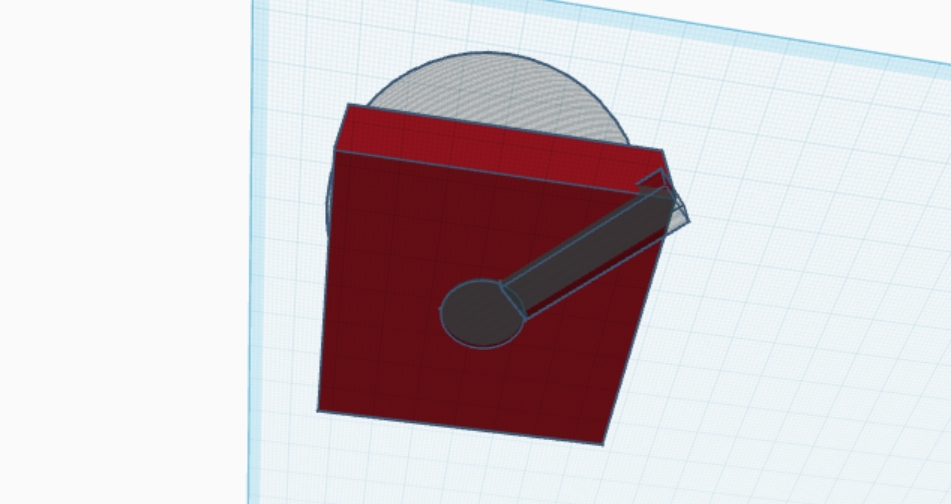
The hole I left at the bottom of the base allows the wire to go through.
What didn’t:
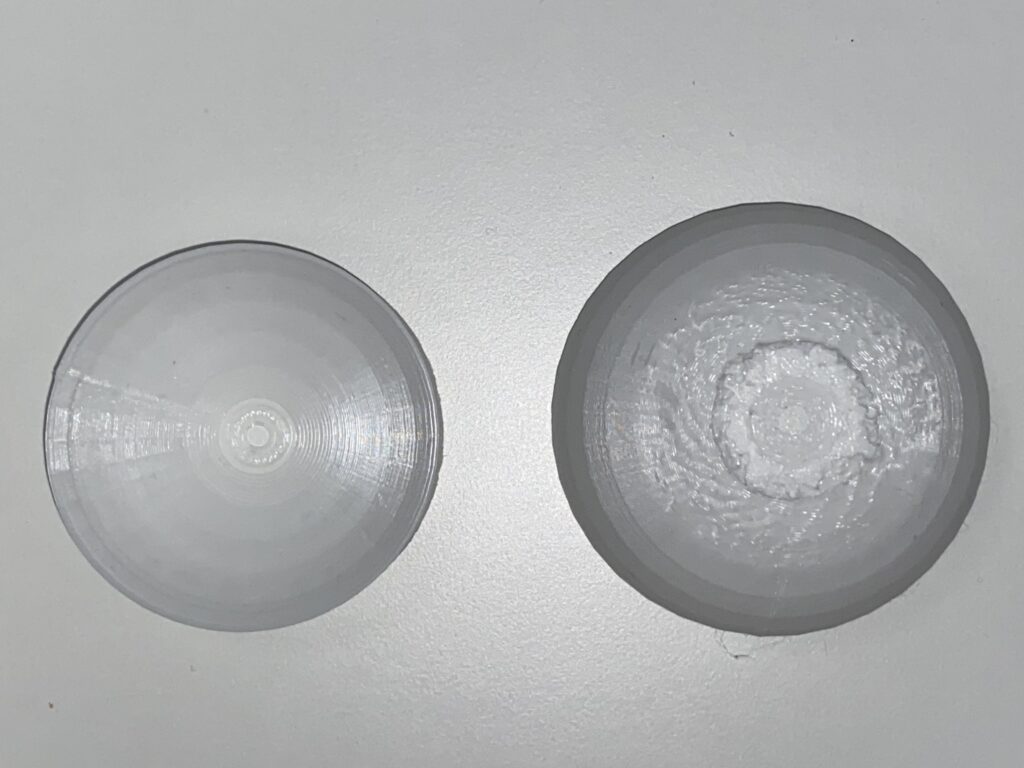
The supporting material attached beneath the sphere can’r be fully removed, which makes it unstable standing in the base – will roll if push, the curve of which is designed based on the sphere.
The infill is too much and dense that makes it unable to insert a bulb or a circuit.
What will be change in next iteration:
The lamp cover is too normal and need to have more texture and detail to make it more like a moon.
I should dig a hole at the bottom of the sphere so that I can insert the bulb.
The base of the lamp should be raised to give extra space to hold the sphere.
I will probably curve out a channel at the bottom of the base to fit and, at the same time, hide the electronic wire.
2nd MVP (Minimum Viable Product)
2nd MVP sphere
2nd MVP base
2nd MVP base
2nd MVP
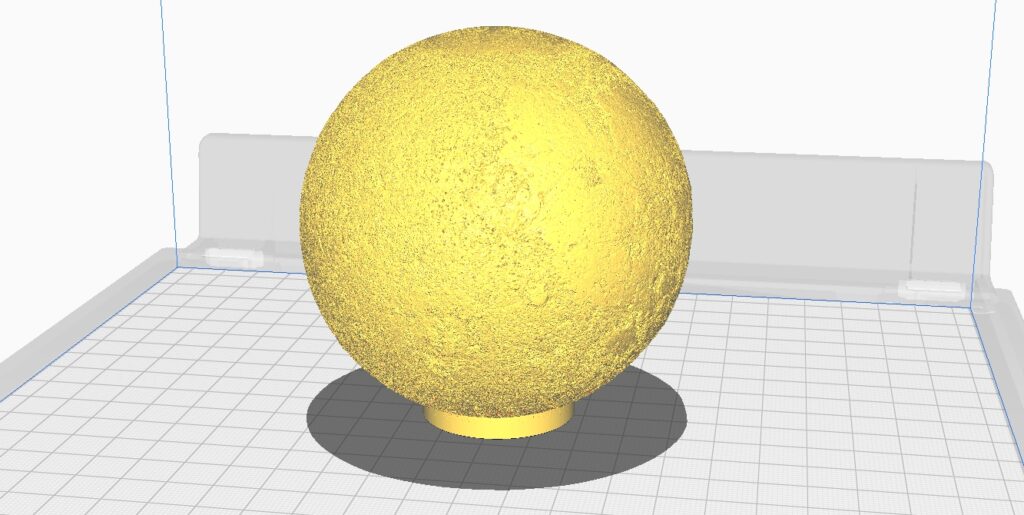
I changed the sphere to a real moon-like sphere that has some texture to mimic the crater on the moon. The infill is automatically set to 70% but it still works out very well with a 30% support! I also size the sphere to a bigger size than the first version of MVP and it supports quite well.
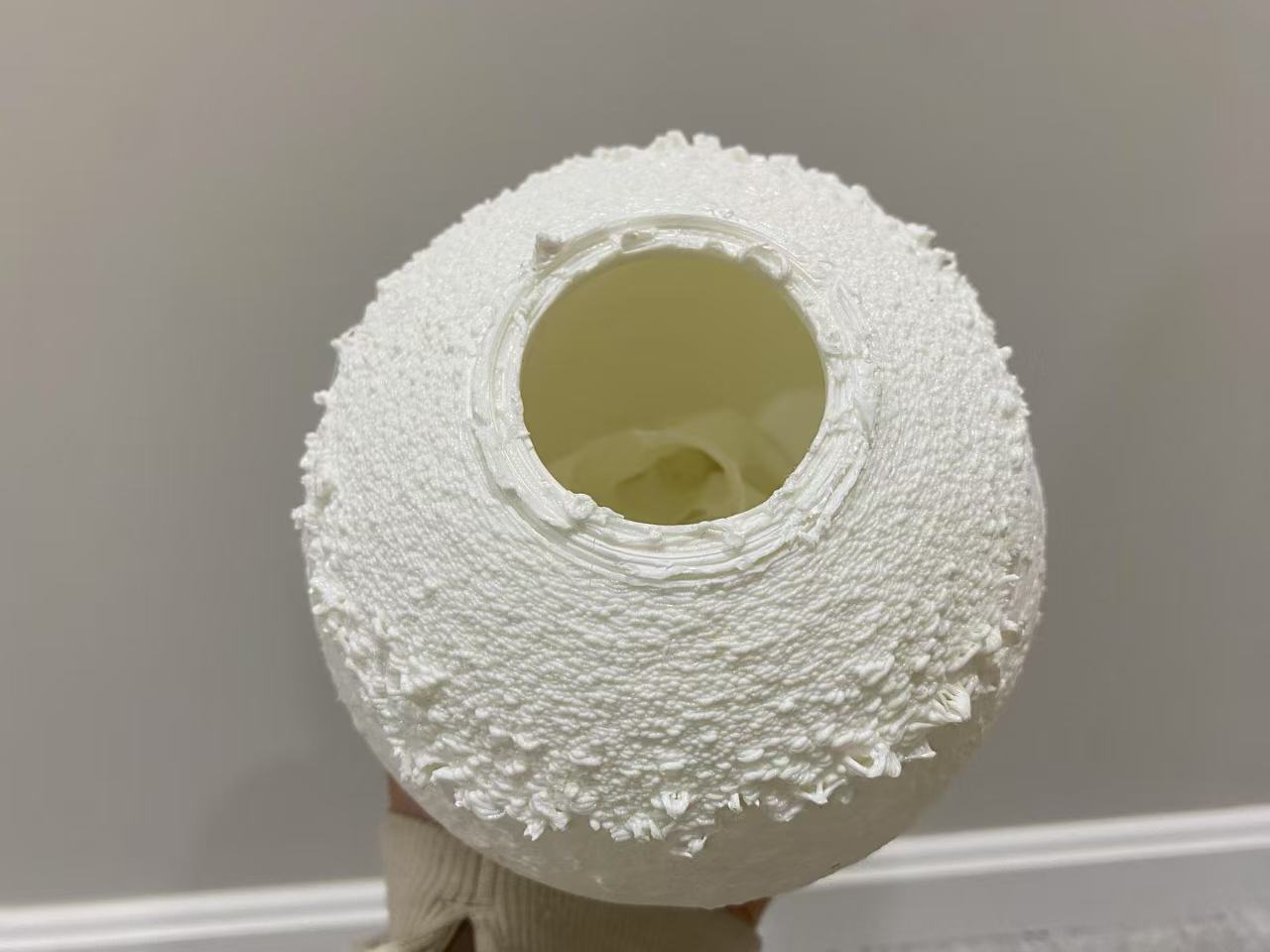
I made the first MVP just by creating a pure sphere, but I changed it to a real moon-like sphere that has some texture to mimic the crater on the moon. The infill is automatically set to 70% but it still works out very well with a 30% support! I still don’t think the PLA material can be a good material as a supporting one as it’s too hard to peal off.
I am curving out a channel at the bottom of the base to fit and, at the same time, hide the electronic wire.
I would raise the base edge of the lamp to give extra space to hold the sphere.
Clear list of what still needs to be completed for your final project
A piece of fine wood that is big enough for a lamp base.
A sphere lamp cover in a bigger size.
Any challenge, open question, or area where you’re still unsure
I never use PVA as supporting materials before and I have no idea whether I can use the machine correctly by setting two materials.
Materials planning to use for the final build: Wood piece (base), PLA (sphere lamp cover), PVA (sphere lamp cover printing support material), LED bulb/circuit
Fabrication methods: CNC, 3D printing, electronics
Final Version
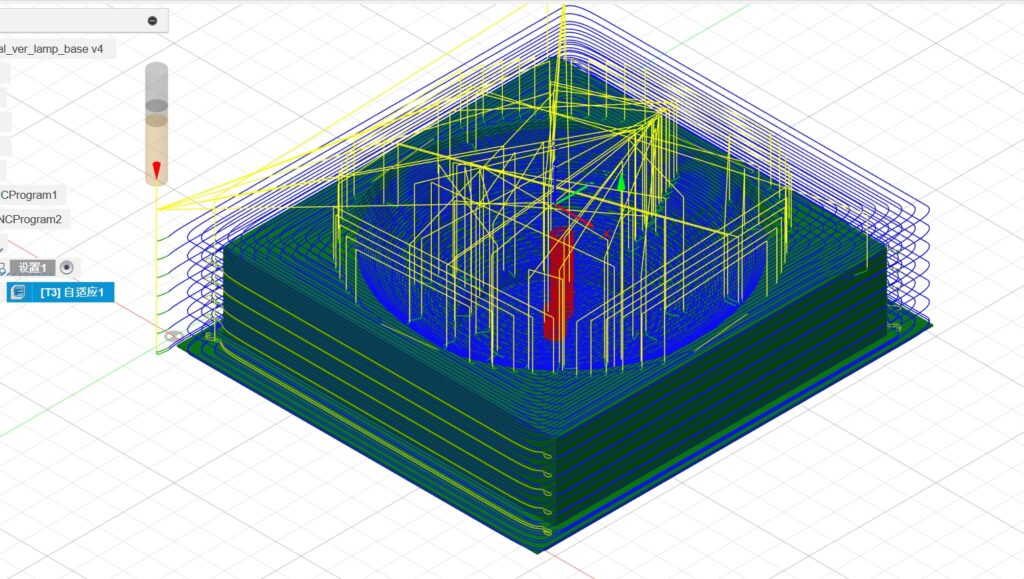
For the base, instead of using Tinkercad this time, I modeled it in Fusion 360 to create a moon-themed base. Since the moon model was too large to convert into a solid object — and I couldn’t subtract a cuboid using a mesh — I created a similarly sized sphere and used it to subtract the cuboid. One thing worth mentioning is that the curved path I originally designed at the bottom of the base now needs to be manually carved, as the CNC machine cannot process that feature.
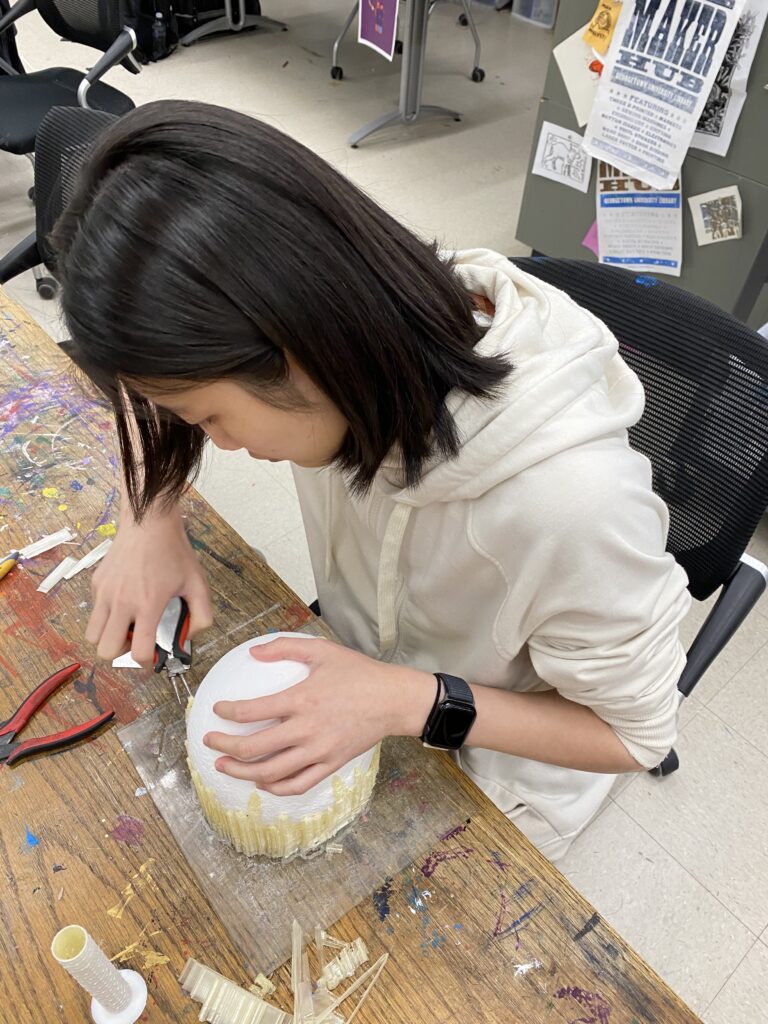
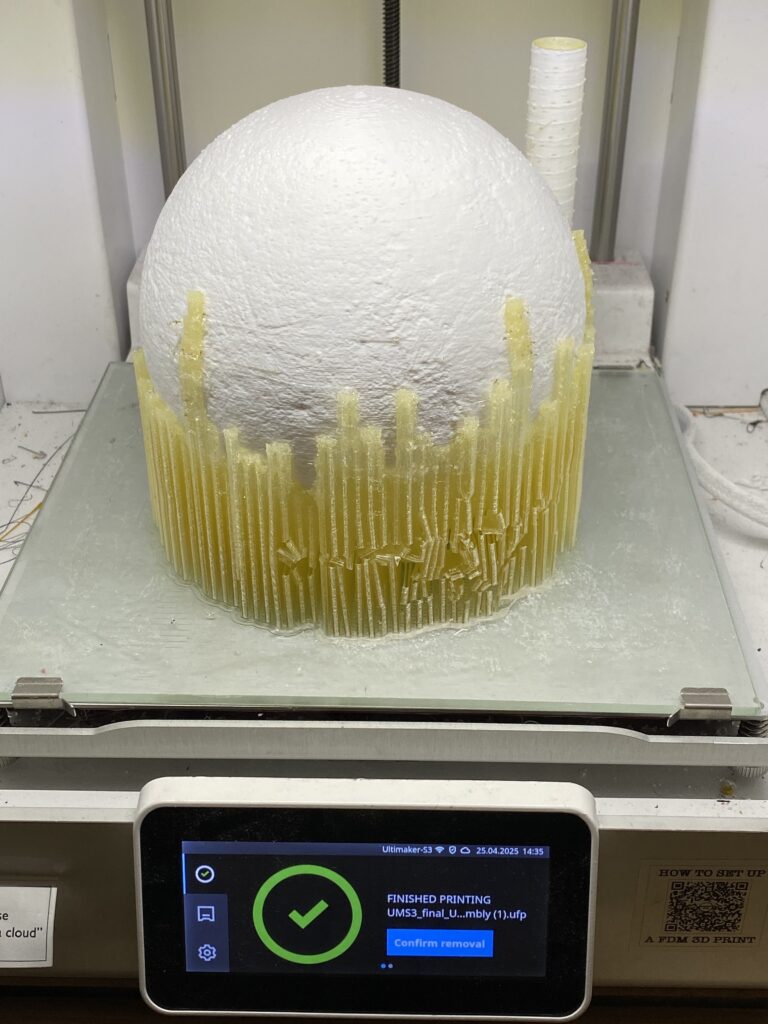
For the lamp cover, I chose PLA as the printing material with PVA as the support material. Since the nozzle had to switch between the two materials, it took about 1 day and 20 hours to print the fastest version of the sphere. As shown in the picture, the transparent yellow material is PVA, while the white material is PLA. You can also check out how the PVA support dissolves in water by clicking on the video.